

Thank you for Subscribing to Business Management Review Weekly Brief


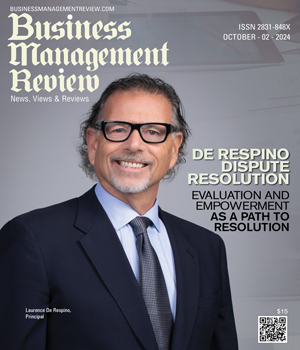
 Laurence De Respino, Principal Most effective legal resolutions happen outside the courtroom. Laurence De Respino, as a former general counsel and chief legal officer of a leading publicly traded company and currently principal of De Respino Dispute Resolution, champions this thinking to lead his mediation practice. With experience on both sides of the legal equation—as client and outside and inhouse counsel—De Respino excels in negotiation and conflict resolution, skillfully avoiding lengthy and expensive litigation. He has employed his unique insights in over 175 mediations, from single- and multi-party disputes to complex class-action lawsuits, making him an invaluable asset in dispute resolution.
Although De Respino is a substantive and evaluative mediator, De Respino seeks permission from the parties prior to sharing his thoughts on the merits and potential outcomes. In this way, he acknowledges that the participants are in control and get buy in. Providing evaluations of a matter can sometimes appear as taking sides or losing neutrality, so De Respino communicates that his views are intended to assist parties and their counsel in making their own assessments. The goal is to empower participants with De Respino’s extensive experience while allowing them to make their own informed decisions. This balanced approach makes De Respino Dispute Resolution a valuable partner in reaching lasting resolutions.
Laurence De Respino, Principal Most effective legal resolutions happen outside the courtroom. Laurence De Respino, as a former general counsel and chief legal officer of a leading publicly traded company and currently principal of De Respino Dispute Resolution, champions this thinking to lead his mediation practice. With experience on both sides of the legal equation—as client and outside and inhouse counsel—De Respino excels in negotiation and conflict resolution, skillfully avoiding lengthy and expensive litigation. He has employed his unique insights in over 175 mediations, from single- and multi-party disputes to complex class-action lawsuits, making him an invaluable asset in dispute resolution.
Although De Respino is a substantive and evaluative mediator, De Respino seeks permission from the parties prior to sharing his thoughts on the merits and potential outcomes. In this way, he acknowledges that the participants are in control and get buy in. Providing evaluations of a matter can sometimes appear as taking sides or losing neutrality, so De Respino communicates that his views are intended to assist parties and their counsel in making their own assessments. The goal is to empower participants with De Respino’s extensive experience while allowing them to make their own informed decisions. This balanced approach makes De Respino Dispute Resolution a valuable partner in reaching lasting resolutions.
Company :
Management
Laurence De Respino, Principal
![]()
Laurence De Respino, PrincipalEmpowering the litigants is central to his mediation strategy, ensuring they feel heard, validated and in control. By focusing on his engagement with the parties and fostering effective interactions between them, he creates an environment conducive to resolving disputes. Through a blend of substantive evaluation, empathy, collaboration and open dialogue, he transforms mediation into a catalyst for mutually agreeable solutions.
“It’s important that participants in mediations feel acknowledged and recognize that I am an active listener. To me, this underscores the process—it’s not always or only about the outcome or the dollar amount a party receives or pays. It’s also about being heard and feeling that they are in control of the process,” says De Respino.
A case involving in laws, embroiled in a heated conflict over their co-owned manufacturing business, perfectly illustrates the efficacy of De Respino’s approach to mediation. The dispute, fueled by disagreements over the company’s direction and personal grievances, threatened both business and familial bonds. In such cases, participants often seek validation, respect and the opportunity to articulate their grievances, which extend beyond the dispute itself. They may desire an apology or simply to feel heard. These needs are especially pronounced when close business or personal relationships are involved. Recognizing the deeply personal nature of conflict and the need to focus on both the process and the outcome, De Respino created a safe space for the family to openly communicate their concerns, helping them move past anger toward understanding. Through guided conversations and creative problem-solving, a mutually agreeable resolution was reached, salvaging both the company and their relationship.
It’s important that participants in mediations feel acknowledged and recognize that I am an active listener. To me, this underscores the process— it’s not always or only about the outcome or the dollar amount a party receives or pays. It’s also about being heard and feeling that they are in control of the process.
With each successful mediation, De Respino Dispute Resolution showcases the transformative power of a holistic approach to conflict resolution, creating certainty, finality and a way forward for individuals and businesses alike. This comprehensive methodology not only addresses the immediate issues but fosters a positive environment for long-term relationships and sustainable solutions.
“I want the process and the interaction to be based on empowering, supporting and encouraging participants to make their own informed decisions from a position of strength and control, so they’re no longer afraid of an uncertain outcome,” concludes De Respino.
Company :
De Respino Dispute Resolution
Management Laurence De Respino, Principal
Description
Laurence De Respino offers top-tier mediation with over 35 years of trial, litigation and executive experience. Expert in early case evaluations and settlement strategies, he brings a distinct perspective from his roles as counsel and advisor. His mediation philosophy focuses on fair evaluation and practical advice, aiming to help parties achieve realistic goals and avoid costly litigation.
